By: Arezoo Shahbazi Roa, MSW, Prevention & Community Educator
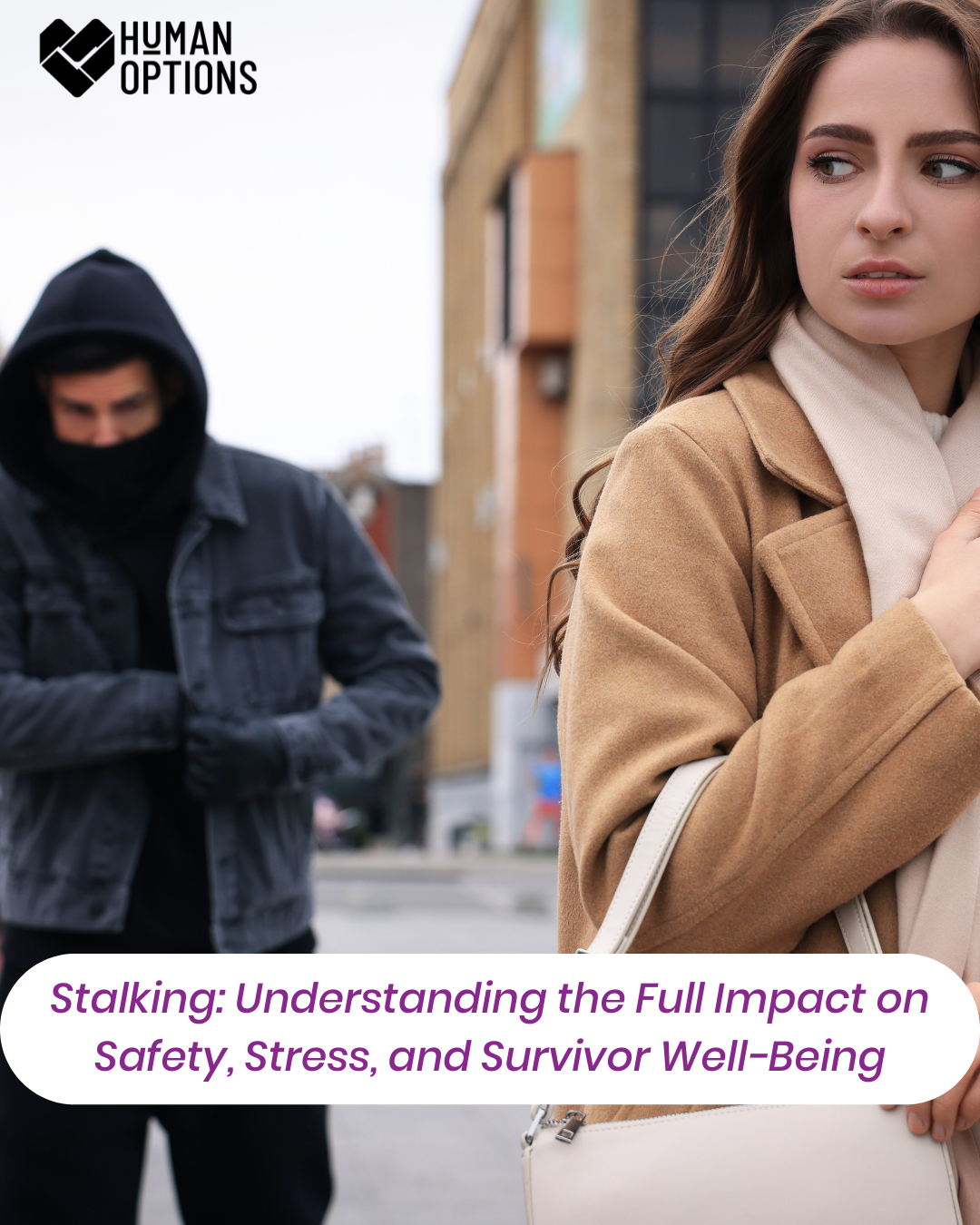
January is Stalking Awareness Month, a time when we talk about one of the least understood but most pervasive tactics used in relationship violence. Stalking is often talked about in terms of fear, danger, or intimidation. But what many people don’t realize is how layered, complex, and far‑reaching the impact of stalking can be on a survivor’s life.
While stalking is a crime in itself, it is also a strategic tool of control. Abusers often use it to track, monitor, and intimidate partners, creating an environment where fear becomes constant, and safety feels distant. What starts with unwanted texts or unexpected appearances can escalate into an ongoing pattern that profoundly disrupts daily life.
Beyond the emotional toll, chronic stress caused by stalking deeply affects survivors’ bodies. The constant state of “fight or flight” can disrupt sleep, elevate blood pressure, and over time, impact long‑term health. Research in recent years, including large‑scale studies on women’s cardiovascular health, brings to the front what survivors have long expressed: trauma doesn’t just change how you feel; it affects how your body functions. Survivors often describe living with hyper‑vigilance, always scanning, always anticipating, rarely feeling at ease. This level of stress is exhausting, and without support, it can compound into serious health concerns that may not be recognized as trauma‑related.
What makes stalking particularly dangerous is how isolating it can be. Many survivors withdraw socially for safety or out of fear of not being believed. That’s why community awareness and trauma‑informed response are important. Healthcare providers, too, play a critical role. Routine screenings, when paired with open conversations about emotional stress and relationship experiences, can help identify when a survivor’s physical symptoms might have roots in trauma. A simple question about safety or stress can open the door to life‑changing, life-saving support.
If you or someone you care about is experiencing stalking, you are not alone. Help is available, and healing is possible. Sometimes, just being there to listen can be incredibly validating. Encourage them to reach out to professionals who can provide tailored assistance and help them think through a safety plan.
At Human Options, we understand that stalking impacts every part of a survivor’s life, not just safety, but physical health, emotional well‑being, and connection to community. Our 24/7 hotline and comprehensive support services are designed to meet survivors where they are, provide options, and help them build a path forward that honors both safety and healing. For more information call our hotline at 877-854-3594 or visit humanoptions.org.